


Understanding the "Tight Junction" Crisis
Your gut lining is only one cell layer thick. Its job is to be a "smart gatekeeper" letting nutrients in while keeping pathogens out.
When you consume a winter diet high in emulsifiers and sugar, the protective mucus layer (the "primary wall") thins out. Without that shield, the "tight junction" proteins like Zonulin become dysregulated. This is the root cause of Intestinal Permeability, or Leaky Gut.
Repairing this isn't just about avoiding bad foods; it’s about providing the specific biological "masonry" your body needs to rebuild the wall.
The SFG BIOME Advantage: Precision Barrier Support

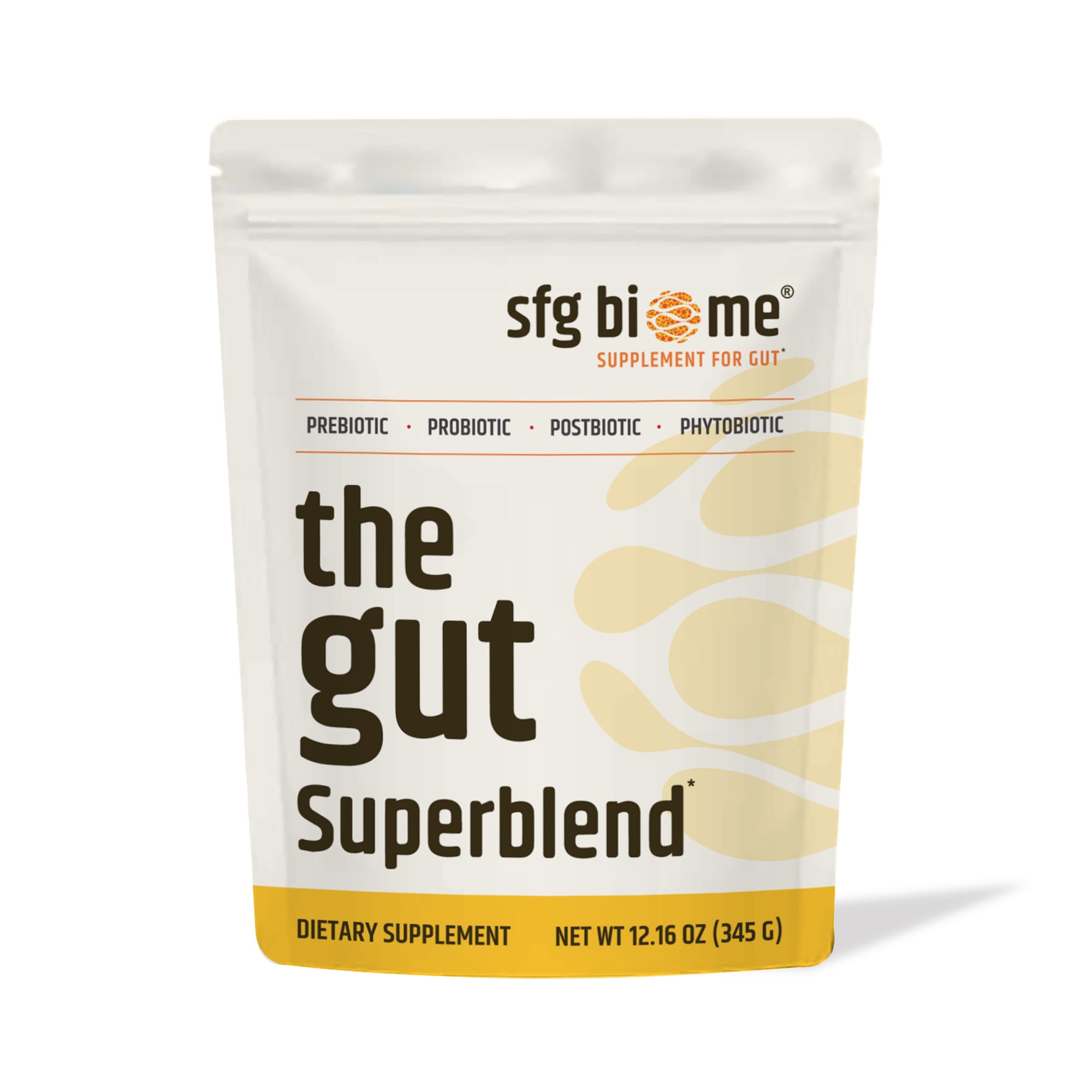
We know that generic probiotics aren't enough to fix a damaged barrier. You need a targeted approach. SFG Biome supplement is engineered specifically for this.
- • Reinforcing the Mucus Layer: supports the growth of "keystone" bacteria that produce mucin, the lubricating shield that prevents toxins from touching your intestinal cells.
- • Modulating Inflammation: By balancing the microbial environment, helps lower the inflammatory "alarm bells" that keep tight junctions open.
- • Nutrient Bioavailability: A damaged gut can't absorb the very nutrients it needs to heal. Supplemetns optimizes your internal environment so that the amino acids and vitamins you consume actually reach your gut cells.
Always consult your healthcare provider before starting any supplement, especially if you are pregnant, breastfeeding, taking medications, or managing a medical condition.
3 Steps to Rebuild Your Gut Shield This March
1. Prioritize "Cellular Spackle" Foods
Think of your gut lining like a brick wall. Amino acids like L-Glutamine are the mortar. During March, incorporate bone broths, slow-cooked stews, and collagen-rich foods. These provide the direct raw materials your intestinal cells use to regenerate every 3 to 5 days.
2. The "Polyphenol Plug"
Polyphenols found in spring berries, green tea, and dark leafy greens act as "sealing agents." They stimulate the expression of proteins that "clip" the tight junctions back together. Pair these with your daily dose of supplements to maximize the structural reinforcement.
3. Eliminate "Barrier Breakers"

For the next 21 days, minimize the three biggest March gut-irritants:
- • Excessive Alcohol: Physically dissolves the protective mucus.
- • Industrial Seed Oils: the oxidative stress that "cracks" the cell wall.
- • A-1 Casein (found in some conventional dairy): Can trigger zonulin release in sensitive individuals.
Key Takeaway
Your "Spring Energy" is gated by your gut barrier. After a winter of heavy comfort foods, your intestinal shield likely needs maintenance. By combining barrier-building nutrients with the precision microbiome support of Supplements, you can close the "tight junctions," stop the leak of inflammation, and enter the new season with a resilient, high-functioning digestive system.
FAQs
1. How do I know if my gut barrier is actually damaged?
Common signs include "unexplained" bloating, sudden food sensitivities that you didn't have last year, skin redness and feeling exhausted even after a full night’s sleep.
2. How long does it take to repair the gut lining?
The intestinal cells themselves turn over very quickly usually every 3–5 days. However, to fully stabilize the barrier and the surrounding immune system, a consistent 30-day protocol with SFG BIOME is recommended.
3. Will "Spring Cleaning" my diet fix leaky gut alone?
Diet is crucial, but if the "bad" bacteria have already taken over the territory, you need the competitive edge of a precision supplement like SFG BIOME to push out the disruptors and allow the lining to heal.
Scientific References
- • Pang, M., et al. (2025). "Interaction between gut microbiota and immunity in health and intestinal disease." Frontiers in Immunology. Learn More
- • Cha, H. J. (2025). "Tight Junction Proteins at the Crossroads of Inflammation, Barrier Function, and Disease Modulation." International Journal of Molecular Sciences. Learn More
- • Naso, A. M., et al. (2025). "A multi-strain probiotic formulation preserves intestinal epithelial and vascular barriers." PMC (Humanitas Research). Learn More
