


The Science: What is "Inflammaging"?
As we get older, our bodies can develop something scientists call inflammaging. This is a slow, quiet type of inflammation that acts like "rust" on your cells. It doesn't hurt like a bruised knee, but over years, it can wear down your heart, brain, and joints.
Your gut is the main shield against this rust. A healthy gut lining keeps "bad" particles out of your bloodstream. When the gut is weak, these particles leak through, triggering the inflammation that makes us feel "old." By keeping your gut bacteria balanced, you essentially apply an "anti-rust" coating to your entire body, helping you extend healthspan (the years you live in good health).
The "Longevity Signatures" of Centenarians

When researchers study people who live to be 100 centenarians, they find a "Longevity Signature" in their bellies. While most people lose bacterial diversity as they age, these healthy seniors keep their "inner garden" incredibly diverse.
The Power of Short-Chain Fatty Acids (SCFAs)
One of the biggest longevity secrets found in healthy older adults is a high level of short-chain fatty acids, like butyrate These are special molecules your bacteria produce when they eat fiber. SCFAs act like "youth fuel" for your cells, they help protect your brain from memory loss, keep your heart strong, and even help your muscles stay firm as you age.
Why "Diversity" is Your Anti-Aging Superpower
Think of your gut like a forest. A forest with only one type of tree is weak and can be destroyed by one storm. But a forest with hundreds of different plants, birds, and insects is strong and can last for centuries.
The Shift in Your 60s
Around age 60, our gut microbiome and aging process hits a crossroads. In many people, "good" bacteria like Bifidobacterium start to decline. When these "good neighbors" move out, "bad neighbors" that cause inflammation move in. Supporting your gut with high-quality supplements and diverse foods helps keep those good neighbors in their homes, protecting your vitality.
3 Simple Habits for a "Younger" Gut

You can start training your gut for longevity today with these easy steps:
- • Eat for Your Microbes: Aim for 30 different plant foods a week (nuts, seeds, fruits, veggies). This creates the diversity that "Super-Agers" are known for.
- • Prioritize "Anti-Aging" Fiber: Foods Scrambled Tofu with SFG Gut Supplement – SFG BIOME like lentils, garlic, and leeks are specifically loved by the bacteria that produce those "youth fuel" SCFAs.
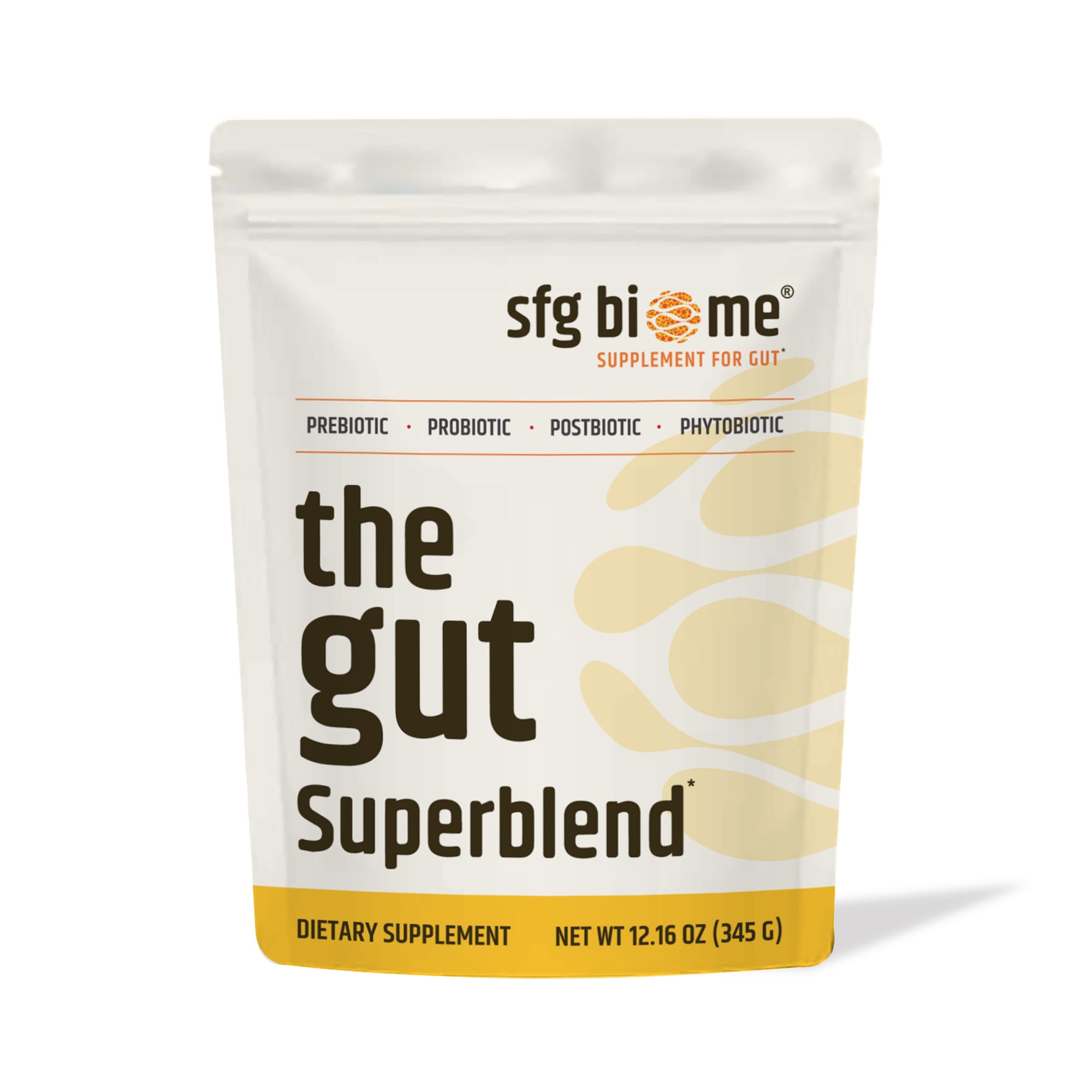
- • Support with Supplements: As we age, our bodies sometimes need a "refill" of the beneficial bacteria that naturally decline.
Always consult with your doctor before starting any new supplement, especially if you have pre-existing health conditions or are taking medication.
Key Takeaway
Aging isn't just about the years on the calendar; it's about the health of your "inner ecosystem." By nurturing a diverse and strong gut microbiome, you can reduce the "inflammaging" that leads to feeling worn down. When you feed your gut the fiber and support it needs, you are investing in a future where you don't just live longer you live better.
FAQs
1. Is it too late to start focusing on gut health if I'm already older?
Never! Your gut microbiome can start changing in as little as three days. Supporting your healthy aging habits now can provide benefits at any age.
2. How does the gut affect my skin as I age?
This is the "gut-skin axis." When your gut is inflamed, it shows up as wrinkles, dryness, or redness. A calm gut helps keep your skin looking hydrated and healthy.
3. What is the #1 enemy of an anti-aging gut?
Ultra-processed sugars and chronic
stress. Both act like "weed killer" in your gut garden, allowing the inflammatory bacteria to take over.
Scientific References
- • Grosso, F., et al. (2025). "Causal relationships between gut microbiome and hundreds of age-related traits." Aging (Albany NY). Learn More
- • Hammad, et al. (2025). "Gut Microbiota: A New Challenge in Aging Research." MDPI Life. Learn More
- • Garzone, et al. (2025). "The landscape in the gut microbiome of long-lived families." Frontiers in Microbiomes. Learn More
